Books
These books go in very different directions, but all begin the same way: by paying attention to things that are easy to overlook and asking where those observations lead.
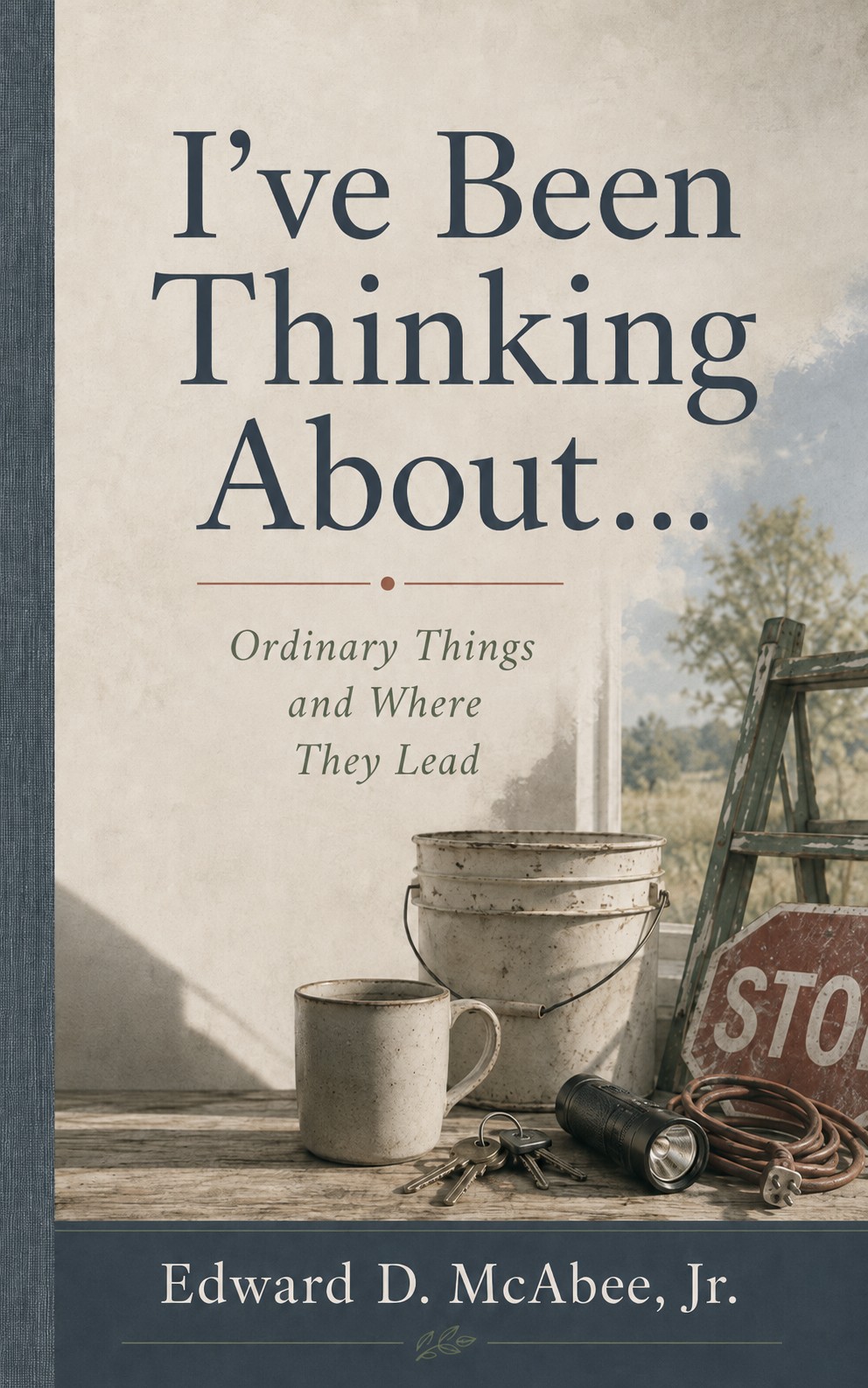
I’ve Been Thinking About…
Essays on Ordinary Things and Where They Lead
The world is full of ordinary things waiting for someone to wonder why.
Ash trays. Automatic doors. Five-gallon buckets. Dog leashes. Spare tires. Mailboxes. Coffee cups. Stop signs. Most of us encounter them without giving them much thought. Edward D. McAbee, Jr. tends to notice them, ask one question too many, and follow the thought wherever it goes.
I’ve Been Thinking About… is a collection of essays that begins with familiar objects and everyday systems, then wanders into work, family, habits, technology, memory, usefulness, change, and the small decisions built into the world around us.
The objects are simply where the thinking begins. Sometimes an observation leads somewhere almost philosophical. Sometimes it uncovers invisible work or a design choice we stopped noticing years ago. And sometimes a bucket is just a remarkably useful bucket.
This second edition is an invitation to interrupt familiarity for a little while and notice what has been sitting in plain sight.
Several essays from the book are available in the Everyday Observations collection on this site.
Fault Lines
Physical and Otherwise
Most failures are not created in the moment they become visible.
Long before a process stops working, a person withdraws, or an organization struggles to respond, pressure has often been accumulating beneath the surface. Someone has been compensating. An assumption has gone unexamined. A temporary adjustment has become permanent. Two reasonable systems have begun pulling in different directions.
Fault Lines: Physical and Otherwise explores the quiet forces that shape families, workplaces, organizations, and everyday responsibilities long before anything appears broken.
Why do outdated rules continue shaping behavior?
Why do reliable systems suddenly seem fragile?
Why does experience sometimes create hesitation instead of certainty?
Why can a system appear successful while quietly exhausting the people who keep it operating?
Through clear, grounded reflections drawn from ordinary life, this book examines rules, systems, assumptions, roles, presence, trust, perception, compensation, depletion, and the moment hidden pressure finally becomes visible.
This is not a management manual, a productivity system, or a promise that every conflict can be resolved.
It is a different way of seeing.
Fault lines are not necessarily failures. They are boundaries where forces meet—where responsibilities overlap, expectations diverge, and movement continues beneath an apparently stable surface.
Recognizing them may not eliminate the pressure.
But it can change where we look, what we notice, and how quickly we assign blame.
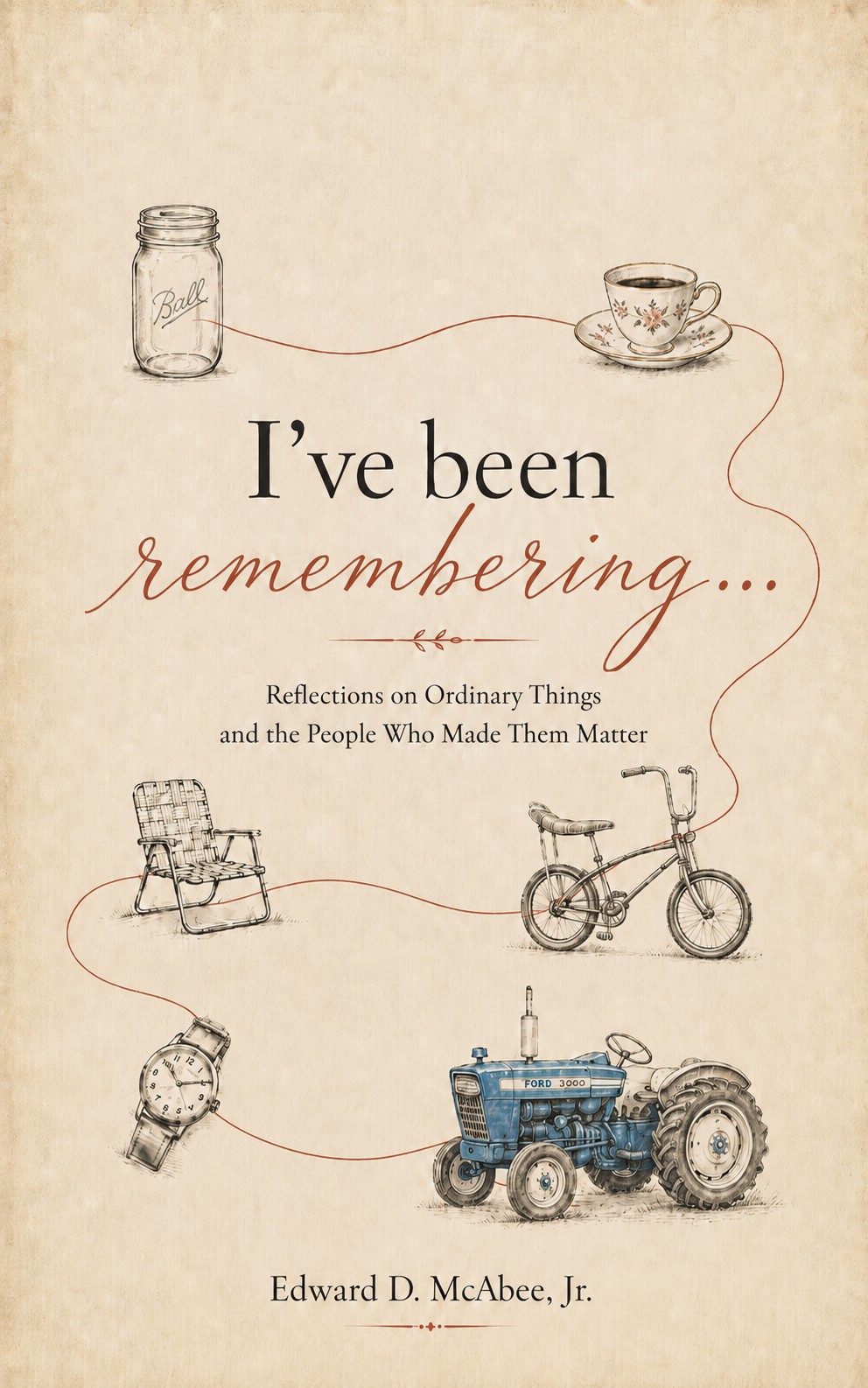
I’ve Been Remembering…
Reflections on Ordinary Things and the People Who Made Them Matter
What if the ordinary things we remember were never ordinary at all?
A mason jar in a kitchen cabinet. A pair of scissors no one was allowed to touch. A hand-cranked ice cream freezer. An unwanted old truck. A cigar box filled with rubber bands. A watch left beneath a lamp.
In I’ve Been Remembering…, Edward D. McAbee, Jr. begins with familiar objects and follows them into the people, places, humor, work, and love stored inside them. These reflections move through kitchens, gardens, downtown sidewalks, pastures, barns, family gatherings, childhood adventures, and the practical world of people who knew how to make things last.
Some of the memories are funny. Others are tender. Many reveal their meaning only after years have passed.
This is not a traditional memoir arranged around dates and major events. It is a collection of stories about the smaller things that quietly shape a life: homemade pie and ice cream, paper grocery sacks, old horses, bicycles, square bales, family Bibles, spare tires, and the people whose presence made those things matter.
Written first for the author’s children, grandchildren, brothers, and extended family, these essays reach beyond one family. They invite readers to think about the objects, routines, voices, and places that still carry their own memories.
Because family history is not found only in records and photographs.
Sometimes it is waiting in a glass cabinet, a tool drawer, an old vehicle, or something someone left exactly where they always kept it.
And what about Long-Term Observation: Humans?
Long-Term Observation: Humans was my attempt at writing science fiction. I completed and self-published it, but it never became the book I wanted it to be and it is not currently in publication.
It still matters to me because it taught me how to move a book from an idea through writing, revision, formatting, cover development, and self-publishing. The book is off the market. The lessons—and the domain name—stayed.
Read more about how this started →